
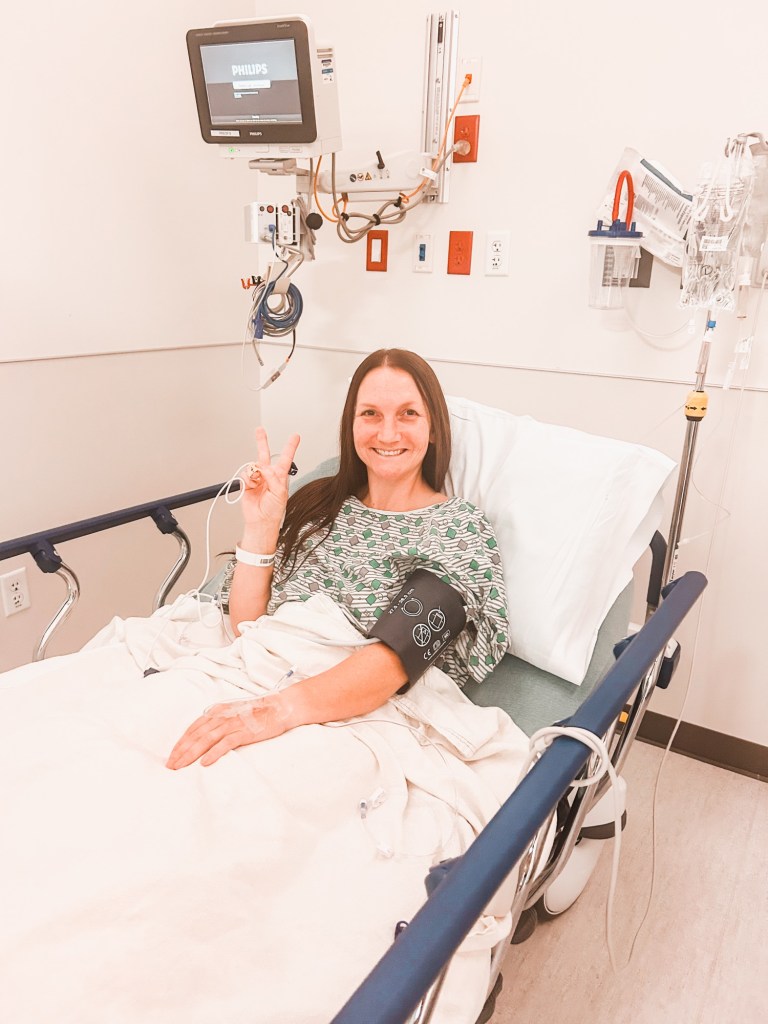
Deciding to have a hysterectomy is a big step, whether it’s preventative or necessary for another reason. In my case, this surgery is preventative due to Lynch syndrome, a genetic condition that puts me at a higher risk for several cancers. After discussions with my doctors, we decided the best path forward was a laparoscopic hysterectomy to remove my uterus, ovaries, fallopian tubes, and cervix. This way, I no longer have a risk of developing endometrial or ovarian cancer.
If you’re preparing for your own hysterectomy, whether for preventative or treatment reasons, I wanted to share both the prep steps that made things easier for me and the recovery tips that helped me heal comfortably.
Pre-Surgery Prep Checklist

The days leading up to surgery can feel overwhelming. Focusing on small, actionable steps made me feel more in control. Here’s what helped me prepare:
- Wash your sheets – This helps to ensure you are sleeping in a clean and sterile environment prior to the surgery in order to reduce the chance of infection. I was also advised to not sleep with any animals the night before surgery.
- Use Hibiclens or cleansing wipes – Many hospitals recommend this to reduce infection risk. I showered the night before and then wiped myself down before climbing into bed.
- As a heads up, I was required to wipe again at the surgical facility right before my procedure and I also had to rinse my mouth with an antiseptic solution and swab the crap out of my nostrils.
- Remove nail polish and jewelry – Doctors and nurses need to monitor circulation, and jewelry can interfere with equipment.
- Skip makeup, deodorant, lotion, and perfume – Your skin needs to be clean and product-free before surgery.
- Stock up on groceries and meal prep – You won’t feel like cooking for a while. Prepping simple, healthy meals ahead of time makes a huge difference.
- Catch up on laundry and cleaning – Coming home to a tidy space helps you relax.
- Entertainment list – Make a list of shows to binge, books to read, or podcasts to catch up on. You’ll want light distractions during recovery.
- Setup a recovery station near your bed – Stock up on water/Gatorade, heating pad(s), snacks, a space for your medications, chargers, electronics, etc.
Recovery Tips

Healing after a hysterectomy takes patience, but there are things you can do to make yourself more comfortable. I took six weeks FML time off of work and am so happy I did. This is a major surgery and it comes with pain and a flood of hormonal changes. It is so important to rest, recover and listen to your doctor. Here are some recovery tips that really helped me heal:
- Stay hydrated – Water supports healing and helps prevent constipation. I also drank a lot of Gatorade.
- Use an abdominal binder – This helps support your muscles and reduces discomfort. Laughing, sneezing, coughing and getting in and out of bed WILL BE painful. Especially the first few days. The binder really helps with pain management and swelling. And an added bonus – it protected my incisions from my crazy kids.
- Take a stool softener – Constipation is very common after surgery and pain medications. Start taking a stool softener right away, or even a day or two prior to surgery. The first #2 after this surgery is NOT fun.
- Keep up with pain medication – Don’t wait until you’re in severe pain; staying ahead helps you heal better. Make a medication chart so you know when to take which pills. Set an alarm to remind you to take them, even in the middle of the night.
- Don’t lift heavy objects – Even grocery bags can strain your incisions.
- Use a heating pad on your shoulders – Gas pain from laparoscopic surgery often travels up to your shoulders; gentle heat helps.
- Get a back rest pillow – Propping yourself up in bed or on the couch makes resting more comfortable.
- Accept help – Let family and friends pitch in with meals, errands, or childcare.
- Ask about hormone replacement therapy – If your ovaries are removed, this may be an option to manage symptoms.
- Keep incisions clean and dry – Follow your doctor’s wound-care instructions carefully.
- Have pads or panty liners on hand – Light spotting is normal during recovery.
Post-Surgery Surprises
While I did feel very prepared for my surgery, there were a few things I experienced that I did not expect and that no one had shared with me. Hopefully these few things will help you out!
- Gas Pain – The gas pain was crazy. It traveled up into my shoulders and my back and I was not expecting that. They fill your abdomen with has so they can see your organs better during laparoscopic surgery and it takes awhile to get that gas out. Make sure you walk and use a heating pad.
- Burred vision – A little over 24 hours after my surgery, mv vision started to get blurry. I noticed while laying in bed that night that the text on my phone was blurry when close to my face, but it got better when I moved my phone farther away. I put my glasses on and things got even worse. I have had issues reading at a distance for about 15 years but never any issues close up so this was really weird for me. I emailed my doctor and he said it could be the way the table was tipped during surgery or hormonal. The table tipping didn’t seem right to me because if my eyes had swelled, I figured I would have noticed the vision issues right away. I did some Googling and found some Reddit threads that claimed the scopolamine patch they had placed behind my ear (this was to help with the nausea that I experience with anesthesia). I removed this the next day and within 12 or so hours my vision was back to normal.
- Swelling – My stomach looked like I was around 4-5 months pregnant for about 4 days. I had not been expecting that. It was very uncomfortable and my clothes did not fit well. The compression band helped with that and thankfully it did not last too long.
- Peeing – Peeing is just weird now. It comes out fast, and when I think I am done, I am not. I have to position my body all sorts of ways to get it all out. It’s annoying and I am hopefully this will remedy itself as I heal.
Final Thoughts
A laparoscopic hysterectomy may be done in just a few small incisions, but it’s still a major surgery. Preparing your home and support system ahead of time makes recovery smoother. Remember, healing isn’t just physical—it’s emotional too. Give yourself grace, rest when your body asks for it, and don’t hesitate to lean on your support network.
If you’re facing this surgery because of a condition like Lynch syndrome, know that you are not alone. Taking this preventative step is a powerful way to protect your health and your future.

 The Patient Mom
Leave a comment