
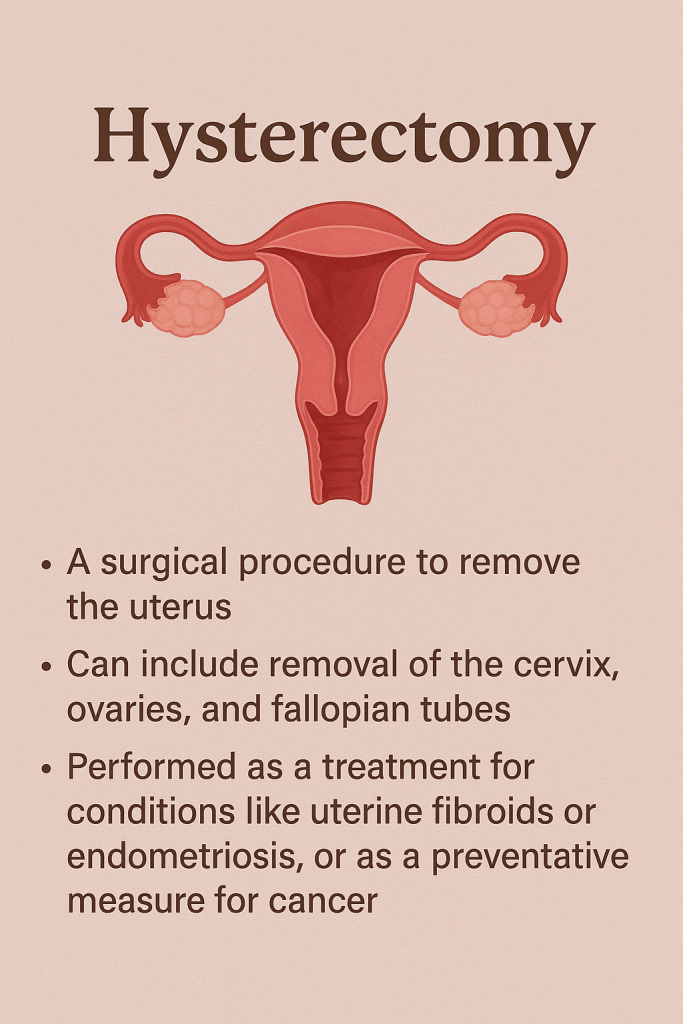
Guess what?! In just two weeks, I’ll be undergoing a full hysterectomy. This isn’t a decision I came to lightly, but it’s an important step in my journey with Lynch Syndrome—a genetic condition that significantly increases my risk of certain cancers.
For me, this procedure is preventative. By removing my uterus, ovaries, fallopian tubes, and cervix, I’ll be eliminating two of my biggest cancer risks: endometrial and ovarian cancer. It’s a proactive choice, and one that gives me peace of mind knowing I’m doing everything I can to protect my long-term health.
What Is Lynch Syndrome?
Lynch Syndrome is a hereditary condition caused by mutations in specific genes that help repair DNA. People with this syndrome face a much higher risk of developing several types of cancer, especially colorectal, endometrial, and ovarian cancer.
Genetic testing confirmed my risk, and after lots of conversations with my doctors, the recommendation was clear: take preventative action.
Cancer Screenings I’ve Had
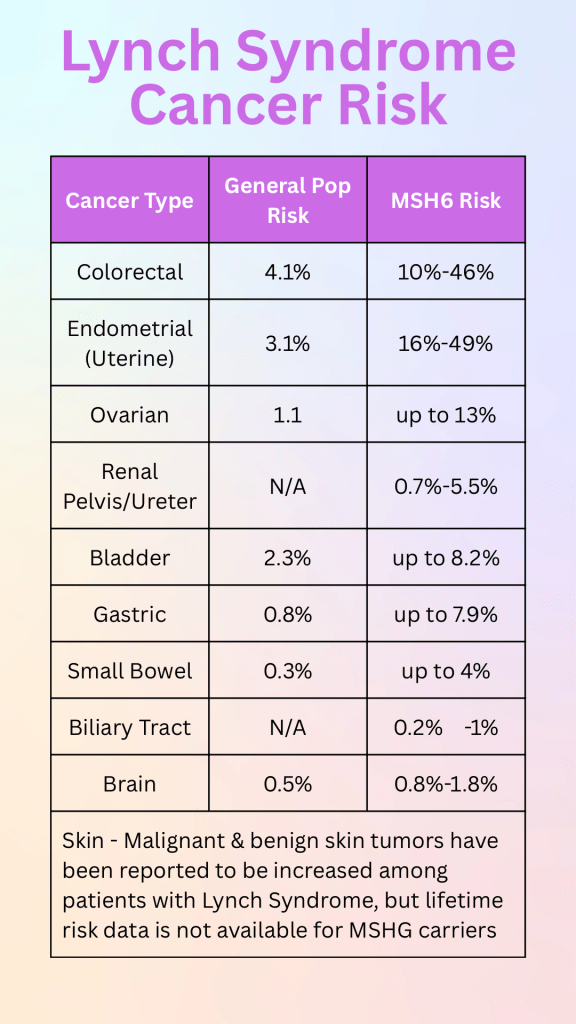
Before making the decision to move forward with surgery, I’ve been through a thorough cancer screening process. So far, my doctors and I have checked every angle we can:
- Colonoscopy and endoscopy to screen for colorectal and stomach cancers
- Abdominal ultrasound and CT scan to take a closer look at internal organs
- Full-body skin check at the dermatologist for skin cancers
- Blood work and urinalysis to catch any abnormalities
While all of these came back clear (thankfully!), having Lynch Syndrome means that staying on top of screening isn’t optional—it’s essential.
🔎 Why These Screenings Matter with Lynch Syndrome
- Colonoscopy & Endoscopy → Lynch Syndrome greatly increases the risk of colorectal cancer, so frequent colonoscopies are recommended. Endoscopies help check for cancers of the stomach and upper digestive tract.
- Abdominal Ultrasound & CT Scan → These imaging tools allow doctors to spot abnormalities in the liver, kidneys, pancreas, and other abdominal organs that can sometimes be affected by Lynch-related cancers.
- Full-Body Skin Check → Some people with Lynch Syndrome are also at higher risk for certain skin cancers, making regular dermatologist visits crucial.
- Blood Work & Urinalysis → These can detect markers or early signs of cancers in the blood, urinary tract, and kidneys—conditions that Lynch patients are at greater risk for.
Together, these screenings create a safety net—catching potential problems early and giving me and my doctors the best chance at prevention and quick action.
Lynch Syndrome by the Numbers
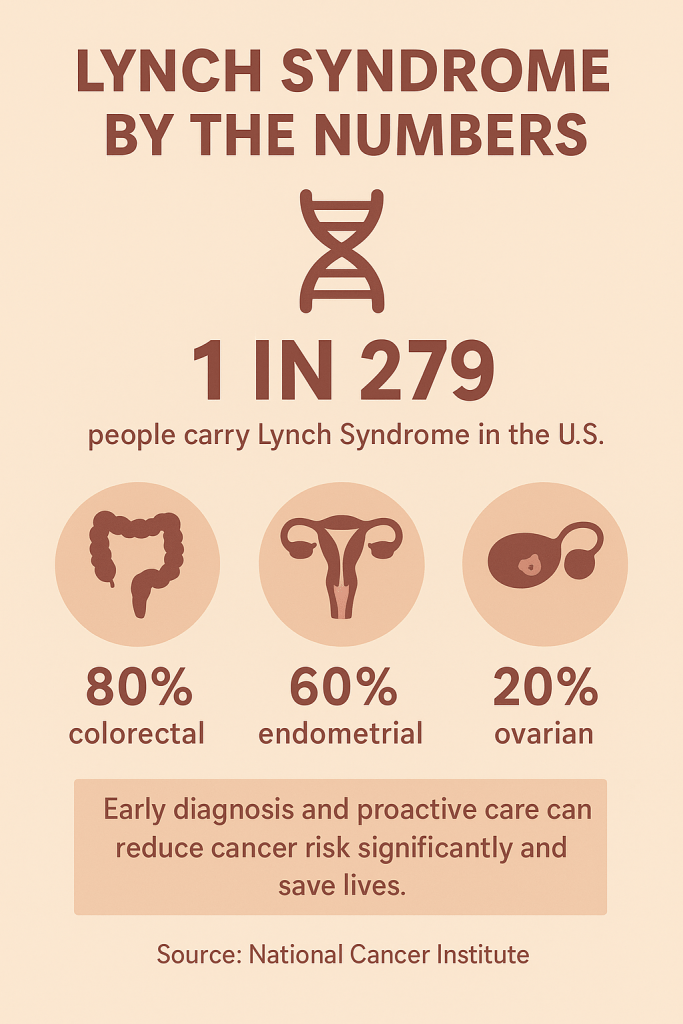
To put things into perspective, Lynch Syndrome is more common than many people realize, yet it’s often underdiagnosed. Here are some quick statistics:
- Lynch Syndrome affects 1 in 279 people in the U.S. (roughly 1.2 million individuals).
- Some people with Lynch Syndrome have up to an 80% lifetime risk of colorectal cancer if not properly monitored.
- The lifetime risk for endometrial cancer is up to 60%, and for ovarian cancer up to 20%.
- Early diagnosis and proactive care can reduce cancer risk significantly and save lives.
Raising awareness about these numbers is part of why I’m sharing my story. If more people knew their family history and had access to genetic testing, countless cancers could be caught earlier—or prevented entirely.
*These numbers are based on gene mutation, family history and more.
Preparing for Surgery
Surgery is always a big deal, and I’d be lying if I said I wasn’t nervous. But I also feel incredibly grateful to have answers through genetic testing and a proactive plan in place.
Right now, I’m:
- Talking with my care team about hormone therapy options so I don’t catapult straight into menopause. I’m thinking I will go the estrogen patch route.
- Gathering recovery tips and advice from other women who’ve gone through a hysterectomy.
- Working with my employer to coordinate six weeks of FML leave.
- Preparing my home for recovery—because rest and healing will be key in the weeks that follow. I have a list of shows to binge, books to read and DIYs to work on for you all!
Why I’m Sharing This
I know so many people have never even heard of Lynch Syndrome until it affects someone they know. By documenting this journey, I hope to raise awareness about genetic testing, cancer prevention, and proactive healthcare.
If even one person reads this and decides to get tested or talk to their doctor about family history, then sharing my story will be worth it.
Follow Along
I’ll be sharing updates on my hysterectomy experience—from surgery prep to recovery to hormone therapy – on my Instagram (www.instagram.com/the_patientmom). If you have recommendations for recovery tips, hormone replacement therapy, or even just words of encouragement, I’d love to hear from you.
This is a big step, but I feel empowered knowing I’m taking control of my health. Thank you for being here with me on this journey. 💙

 The Patient Mom
Leave a comment